
SEEING THE WHOLE PERSON: WHAT THE DEMENTIA COMMUNITY TEACHES US
This week, 10–16 May, is National Palliative Care Week 2026, with the theme Getting to the heart of it: Big Questions. Real Answers.
It is a theme that invites us to think more deeply about serious illness, end-of-life care, dignity, quality of life and connection. It also asks us to have better conversations about care, not only in clinical settings, but across families, communities and the places where people live their daily lives.
For people living with dementia, and for the families and carers walking alongside them, these conversations are deeply important. For many people, those conversations are still happening too late, or not at all. Current data shows how significant the gap remains. In permanent residential aged care, only a small proportion of people are formally identified as requiring palliative care, even though many residents live with complex conditions, including dementia. Palliative Care Australia has also warned that people in residential aged care are less likely to receive specialist palliative care, and when they do, it often comes very close to death. This has to change.
As part of National Palliative Care Week, Dr Michael Chapman presented Rethinking Dementia and End-of-Life Care, exploring what dementia means for our communities and how the way we understand dementia influences the impact it has on all of us.
Dr Chapman discussed new ways to rethink dementia, with important implications for palliative care support for people living with the condition. He also reflected on how better conversations, practice support and person-centred care can improve quality of life, dignity and connection. As Dr Chapman said, people control nothing but influence everything.
“That idea speaks closely to the heart of this story”
While we may not control every part of ageing, illness, dementia or end-of-life care, we can influence how people experience those moments. We can influence the conversations we have, the support families and carers receive, and whether a person feels seen, heard and valued.
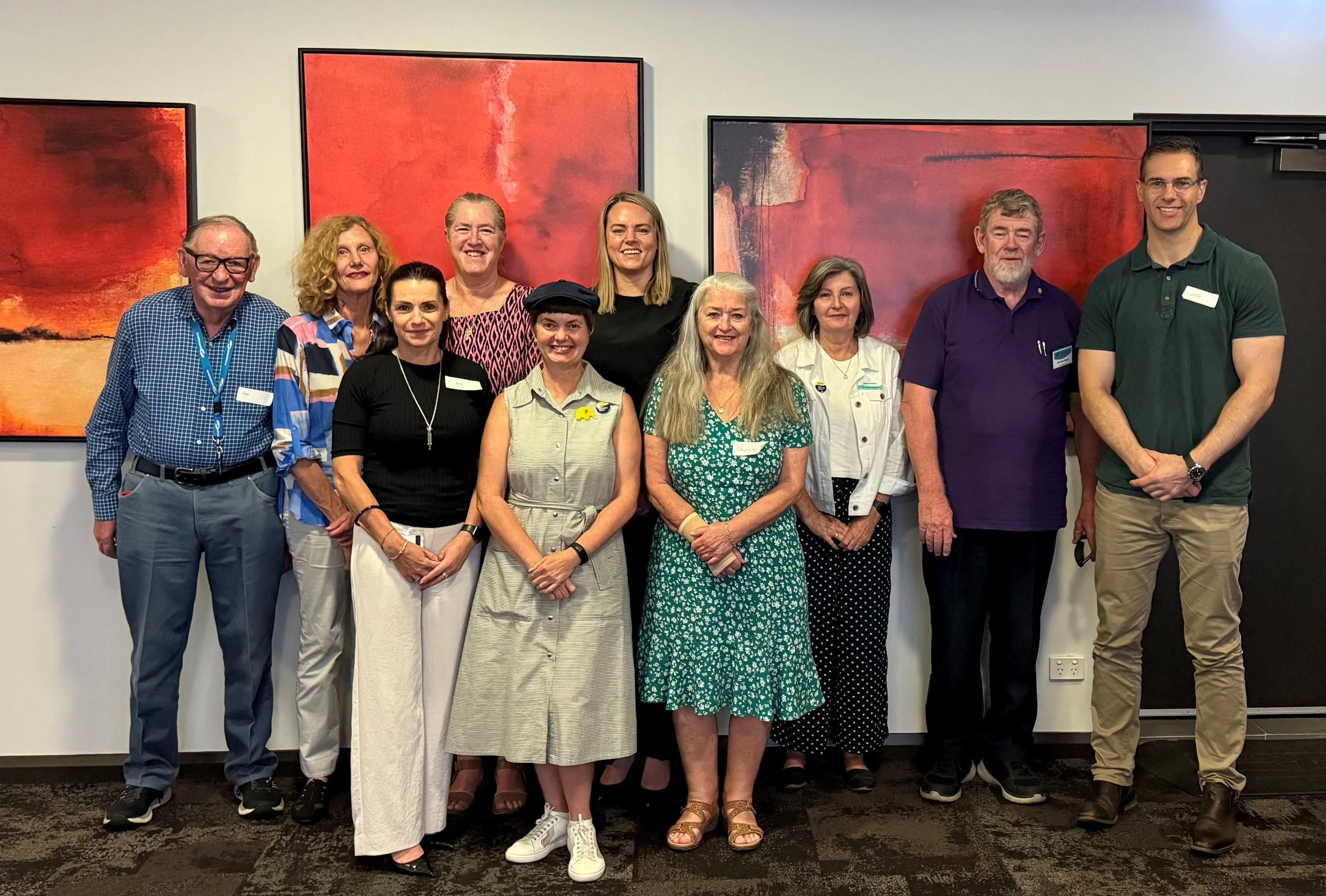
Through our connection with the Canberra Dementia Alliance, we continue to learn from a community whose stories speak quietly, powerfully and deeply about what it means to remain connected to one another.
Dementia is often described in the language of health, care and systems. But beyond those terms is something much more human. Dementia is about people — about lives still being lived, relationships still being held, and moments of recognition, joy, frustration, tenderness and love that continue even as other things change.
The dementia community is broader than the people living with dementia, it’s also their carers, partners, children, friends, neighbours, advocates and the many unseen hands that help carry on daily life. It is a community shaped by patience, adjustment, compassion and remarkable strength. It is also a community that asks the rest of us to slow down, pay attention and see more carefully.
Through our involvement with the Canberra Dementia Alliance, we have been given the privilege of listening to stories from this community. No two are the same. Each person’s experience is different. Each family finds its own way through. And yet, across these different stories, certain truths seem to echo.
One of them is this: even when memory changes, personhood remains.
This is often felt most clearly in the ways people are remembered and held by those around them. In gatherings of family and friends. In songs that are still recognised. In familiar rituals. In the voice of someone who speaks not just about what was lost, but about what remained. There is something deeply moving in those moments, because they remind us that a person is never only their diagnosis.
Sometimes what stays is found in music. Sometimes in humour. Sometimes in a familiar expression, a lifelong habit, a look, a gesture, or the way a room still warms to the mention of someone’s name. And sometimes it remains in the quiet language of style — the grace of getting dressed, the instinct for colour, the dignity of presentation, the part of a person that still reaches for beauty and says, this is me. Families often speak of this with both tenderness and heartbreak: that some things changed, and some things did not. That even through dementia, the essence of a person could still be felt, still be known, still be loved.
It reminds us that dementia does not erase a person. It may alter how life is navigated, how memories are held, or how communication happens, but it does not cancel identity, dignity or humanity. The person is still there, deserving not only care, but recognition.
For many people living with dementia, the world can become harder to move through. Places may feel unfamiliar. Conversations may move too fast. Everyday tasks may ask more than they once did. Yet even within these changes, people continue to seek what all of us seek: belonging, understanding, routine, connection, and the comfort of being known.
And around them are others carrying their own quiet forms of care. Carers and loved ones often work tirelessly to make sure the person in their care is comfortable, safe and happy. At times, that means doing much more than simply following a plan. It can mean advocating, insisting, explaining, waiting, adapting and, when necessary, pushing back against systems that can treat people according to schedules rather than according to who they are. Sometimes care means refusing to let a person become a timetable, a task, or a box to be ticked. It means holding on to their routines, preferences, dignity and sense of self, even when doing so takes extra effort. It means continuing to see the person as they deserve to be seen: whole, human and worthy of tenderness.
These are the stories that matter, because they reveal something essential about community. They show us that care is not only clinical. It is relational. It lives in how people are spoken to, how they are welcomed, how they are remembered, and whether they are given space to remain part of the world around them.
Our relationship with the Canberra Dementia Alliance has deepened our understanding of this. It has reminded us that listening matters. That dignity matters. That inclusion is made real moment by moment, in whether people feel safe, recognised and respected.
This is not work for families and carers alone. As a community, we all have a role to play in creating places, conversations and services where people living with dementia feel seen, included and respected.
The dementia community is not separate from the rest of community life. It sits within it. These are our parents and grandparents, our partners, our siblings, our friends, our neighbours. Their stories are not on the edges of our shared life; they are part of its centre.
At The Tradies, we are grateful to keep learning from Canberra’s dementia community — from people living with dementia, from carers, from families, and from the many support networks, seen and unseen, that continue to show what care, humanity and connection really look like.
What this means
To understand dementia well, we have to look beyond the diagnosis and keep seeing the whole person. We also have to recognise the many people who walk beside them, often quietly, helping sustain comfort, dignity, safety and connection every day.